Dentures in South Philadelphia: Comfortable, Natural-Looking Options for a Full Smile
Modern dentures in South Philadelphia are more comfortable and natural-looking than ever. Here's how full, partial, and implant-supported dentures compare.

If you’re missing several teeth — or you’ve been getting by with a denture that no longer fits the way it used to — you probably have a running list of small frustrations. Foods you avoid. Photos you step out of. That quiet worry about whether something will shift while you’re talking. At our family-run practice on South Broad Street, we hear it from South Philadelphia patients every week, and we want you to know it doesn’t have to stay that way.
Dentures have come a long way. Today’s options are lighter, better fitting, and made to look like natural teeth rather than a set of obvious replacements. Here’s a plain-English look at how they work and how to figure out which type fits your life.
What Modern Dentures Actually Look Like Today
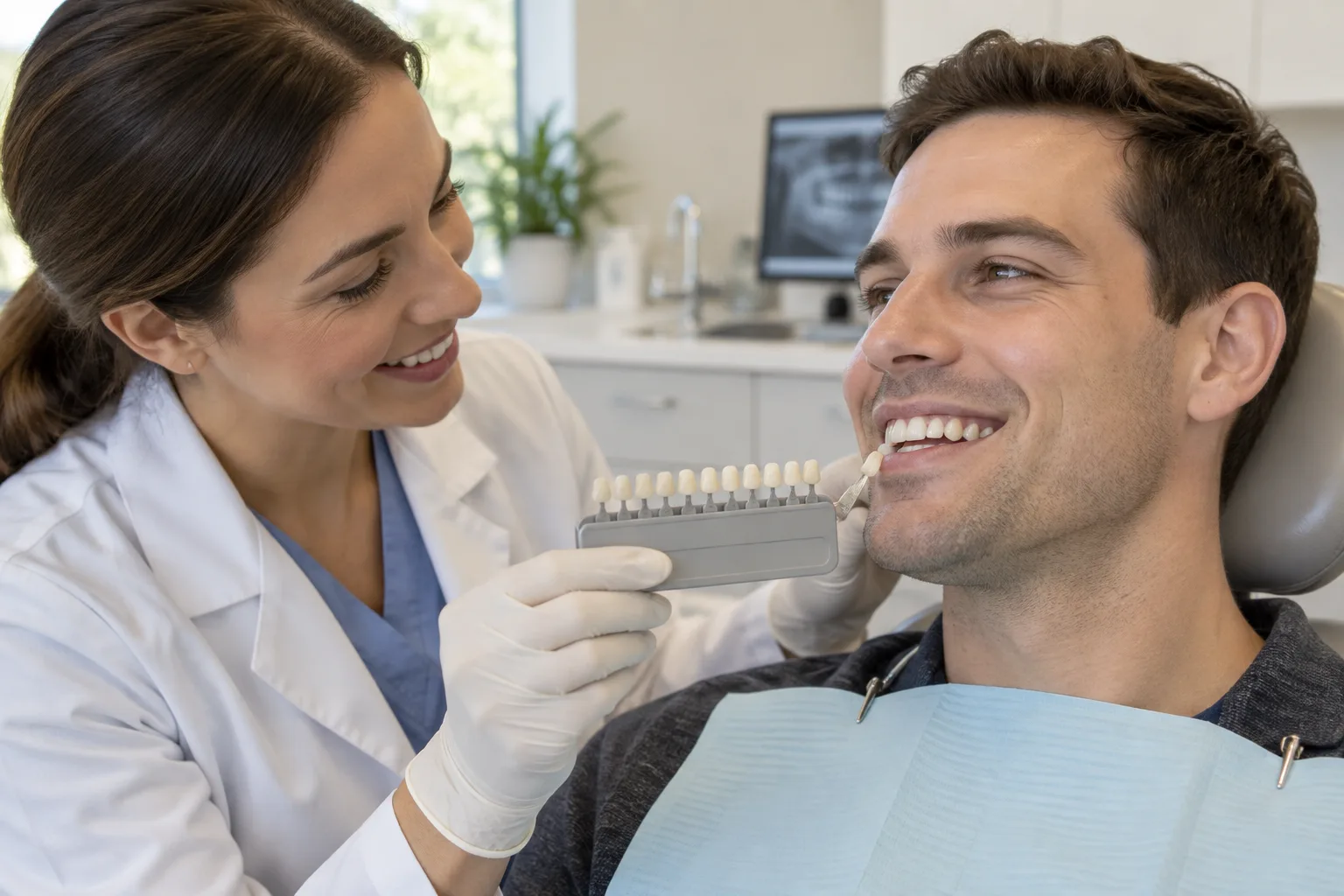
The stiff, bulky dentures people picture are largely a thing of the past. We design dentures using digital impressions and materials that mimic the translucency of real enamel and the tone of healthy gum tissue. Shape, shade, and even the slight natural irregularities of your teeth can be customized so the result looks like you — not like a template.
Just as important, a well-made denture supports your lips and cheeks. When teeth are missing for a long time, the face can start to look sunken or aged. Restoring that support often gives people back a fuller, more rested appearance along with a working bite.
The Main Types of Dentures
Most patients we see in South Philadelphia end up choosing between three approaches:
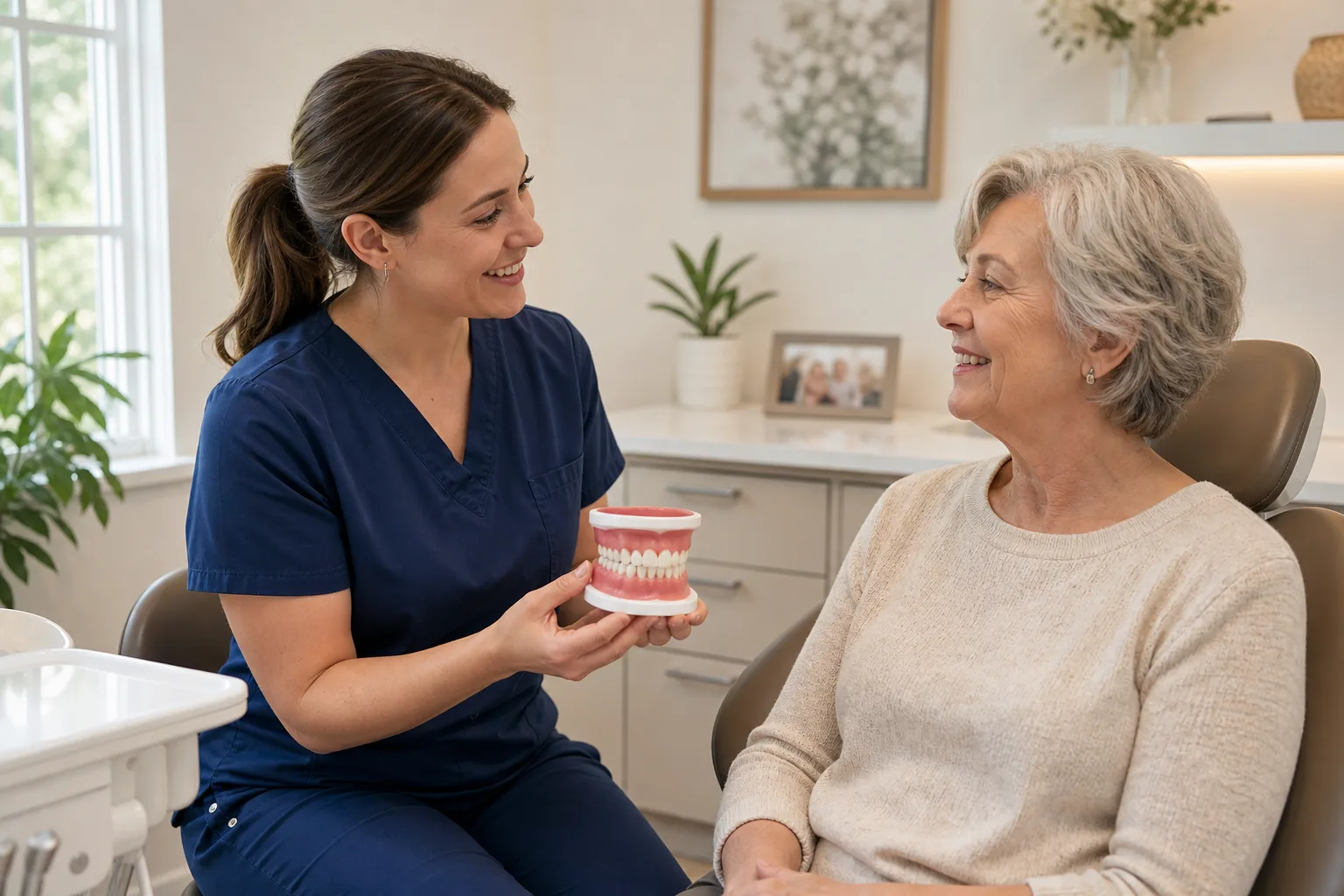
- Full dentures replace all the teeth in the upper arch, the lower arch, or both. They rest on the gums and are removed for cleaning.
- Partial dentures fill in the gaps when you still have healthy natural teeth. They clasp or attach discreetly to the remaining teeth and help keep those teeth from drifting.
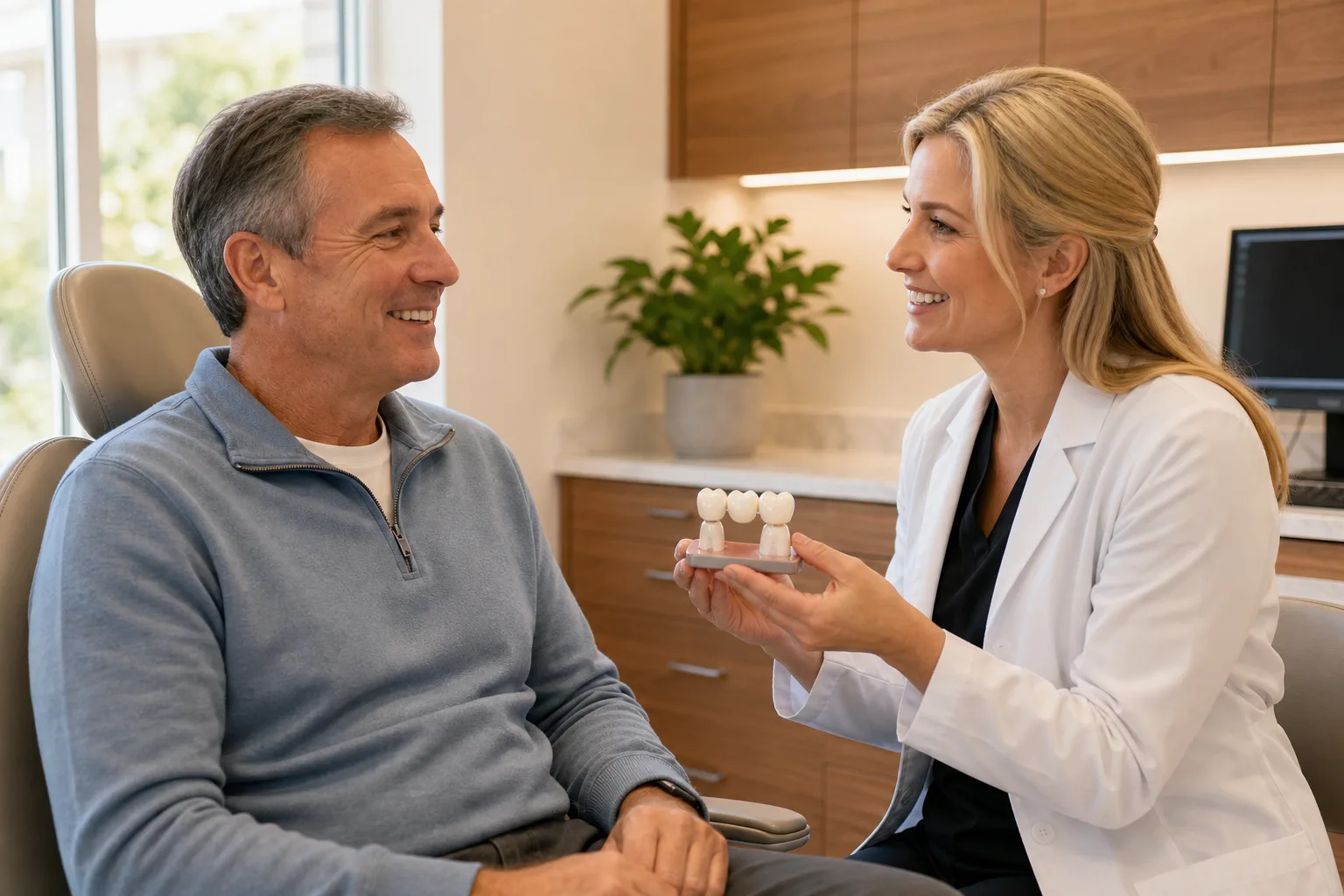
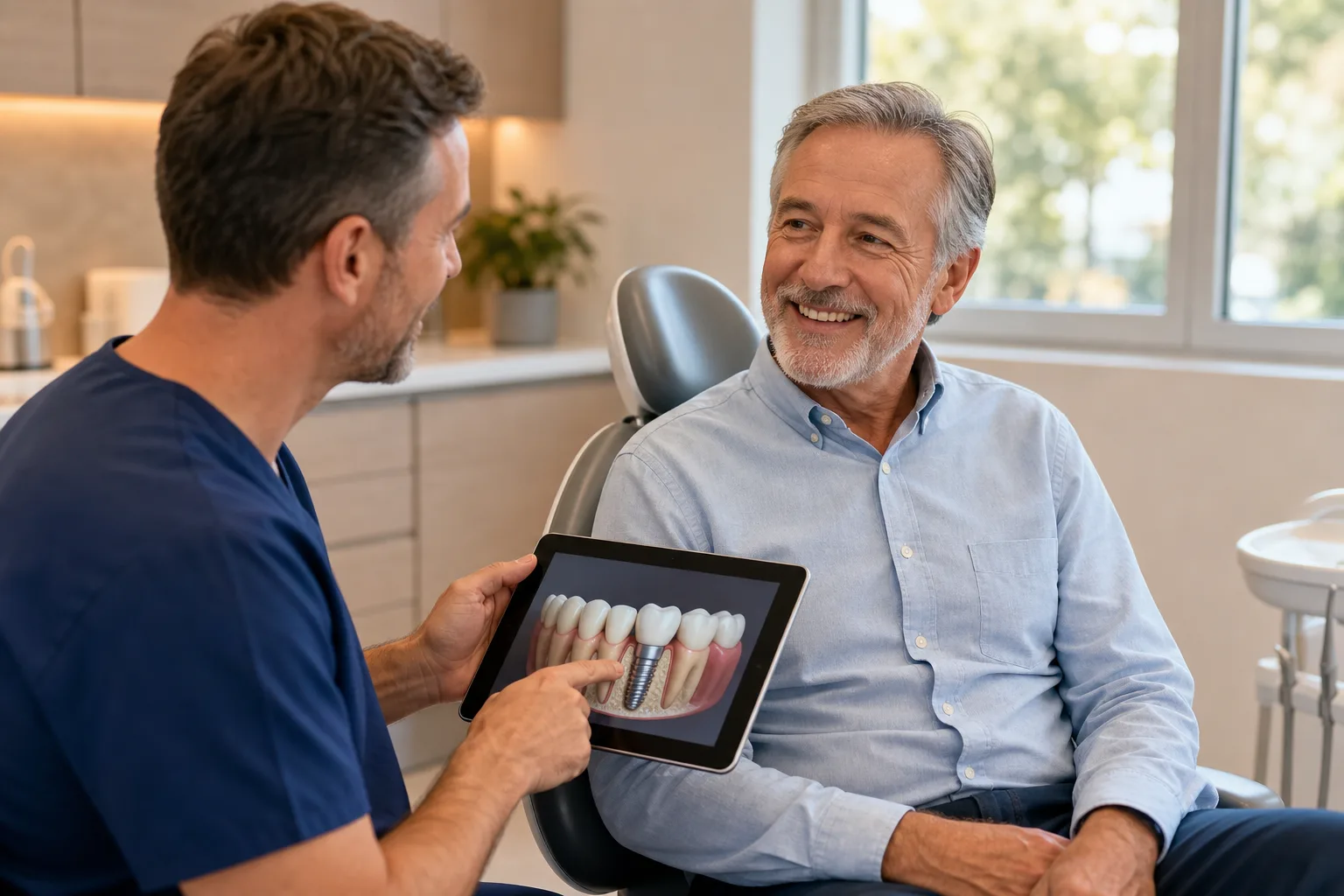
- Implant-supported dentures snap onto a small number of dental implants placed in the jaw. They don’t rely on suction or adhesive, so they stay put while you eat and speak.
There’s also a fixed, non-removable option — a full-arch restoration secured permanently on implants — for patients who want teeth that never come out. We’re happy to walk you through how that compares if it’s something you’re curious about.
Removable or Implant-Supported: How to Decide
There’s no single right answer, and the honest truth is that budget, bone health, and lifestyle all matter. A few things worth thinking about:
- How much chewing power do you want back? Implant-supported dentures generally allow a stronger, more confident bite than traditional removable ones.
- Do you have bone loss? When teeth have been missing for years, the jawbone shrinks. Implants help preserve bone; removable dentures do not. Bone grafting can sometimes rebuild what’s needed.
- How do you feel about adhesive? Many patients come to us mainly because they’re tired of pastes and powders.
- What’s realistic for you right now? Some patients start with a well-fitting removable denture and move to implants later. That’s a perfectly good path.
We’ll go over the options with imaging, clear pricing, and no pressure. Our job is to lay out the trade-offs honestly so you can pick what makes sense for you.
What the Process Usually Looks Like
Every case is a little different, but a typical denture journey has a few familiar steps:
- Consultation and exam. We look at your remaining teeth, gum health, and jawbone, and talk about what you want your smile to do.
- Any needed preparation. That may include treating gum disease, extracting teeth that can’t be saved, or planning implant placement.
- Impressions and design. We capture the shape of your mouth and select tooth shade and shape together.
- Try-in. You’ll see and often test a preview so adjustments happen before the final denture is made.
- Delivery and fine-tuning. Small adjustments in the first few weeks are normal and expected — please tell us about sore spots rather than living with them.
Where our schedule allows, we try to keep temporary options in place so you’re not without teeth during the process.
Caring for Your Dentures
A little routine goes a long way:
- Clean them daily with a soft brush and a denture-safe cleaner — regular toothpaste is often too abrasive.
- Take them out overnight unless we’ve told you otherwise, and store them in water or solution so they don’t dry out.
- Rinse after meals when you can.
- Keep brushing your gums, tongue, and any remaining natural teeth.
- Keep your regular checkups. Gums and bone change over time, and dentures need periodic relining or replacement to stay comfortable.
If a denture suddenly feels loose, rubs, or clicks, that’s a sign to come in. A quick adjustment now is much easier than a sore that keeps you from eating.
Let’s Talk About Your Smile
Whether you’re replacing a few teeth or starting fresh, you deserve a smile that feels secure and looks like it belongs to you. Our team on South Broad Street would love to sit down with you, answer your questions, and map out the option that fits your mouth and your budget.
Ready when you are — schedule a visit with our South Philadelphia team and let’s get you smiling comfortably again.
Dr. Salvatore A. Pera, DMD
General & Cosmetic Dentist · Founder
Dr. Salvatore Pera founded Pera Dentistry & Aesthetics in South Philadelphia to bring comprehensive dentistry and aesthetic care together under one roof. Alongside Dr. Louis Pera and Dr. Maria Pera, he treats every patient the way he would treat family — unhurried, thorough, and focused on long-term health.
Meet the DoctorsBook a consultation with our team
Same-week appointments are available for new patients in South Philadelphia. We accept most PPO insurance plans.
Book an Appointment(215) 468-1425