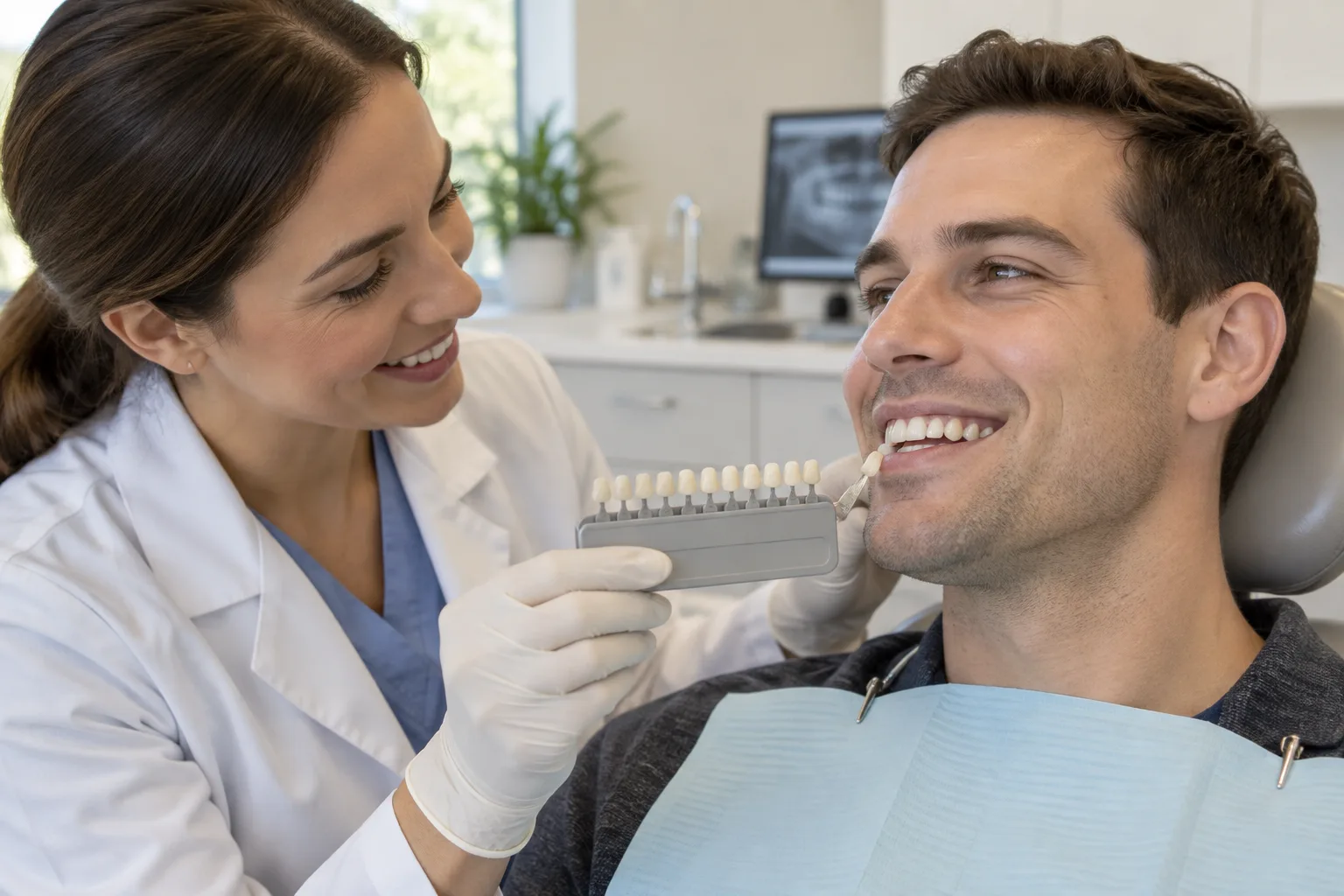
Dental Bridges in South Philadelphia: Filling the Gap With Confidence
A dental bridge fills the gap left by a missing tooth with a fixed, natural-looking result. Here's how bridges work and what to expect in South Philadelphia.


Losing a tooth changes more than your smile. It changes how you chew your favorite cheesesteak, how you sound when you talk, and how confident you feel in a photo with your family. At our family-run practice on South Broad Street, we hear the same question all the time: “What’s the simplest way to fill this gap?” For many of our South Philadelphia neighbors, the answer is a dental bridge.
What Is a Dental Bridge?
A dental bridge does exactly what the name suggests — it bridges the space left by one or more missing teeth. A replacement tooth (called a pontic) sits in the gap and is supported on either side by your neighboring teeth, which are fitted with custom crowns. Once it’s in place, the bridge is fixed. You don’t take it out at night, and most patients tell us that within a week or two, they stop thinking about it entirely.
Bridges have been a trusted solution in dentistry for decades, and modern materials have made them better than ever. Today’s porcelain and zirconia bridges are shaded to match your surrounding teeth, so the result looks like the tooth you remember rather than a repair.
Why Filling the Gap Matters
It’s tempting to leave a missing back tooth alone, especially if it doesn’t show when you smile. But teeth work as a team. When one is gone, the others gradually shift to fill the space, and that creates problems we’d rather help you avoid:
- Neighboring teeth tilt or drift, making them harder to clean
- The opposing tooth can over-erupt, growing down into the empty space
- Uneven bite pressure leads to jaw soreness, clenching, and worn enamel
- The jawbone in that area slowly loses stimulation and volume
- Chewing shifts to one side, which can strain the jaw joint
Restoring the space early keeps your bite balanced and usually means simpler, less expensive dentistry down the road.
Types of Bridges We Use
There isn’t one bridge that suits every mouth, so we choose based on where the gap is, how healthy the neighboring teeth are, and what you want long term.
- Traditional bridge: The most common option — a pontic supported by crowns on the teeth on both sides of the gap.
- Cantilever bridge: Used when there’s a healthy tooth on only one side of the space.
- Maryland (resin-bonded) bridge: A conservative choice for front teeth, bonded to the backs of adjacent teeth with minimal reshaping.
- Implant-supported bridge: Anchored to dental implants instead of natural teeth, ideal when several teeth in a row are missing or when we want to protect healthy neighbors.
If you’re weighing a bridge against a single implant, we’re happy to walk you through both. You can read more about our dental implants in South Philadelphia, and we’ll help you compare cost, treatment time, and how each option holds up over the years.
What to Expect at Your Appointments
A traditional bridge usually takes two visits, spaced a couple of weeks apart.
- Visit one: We numb the area, gently shape the supporting teeth, and take digital impressions. You’ll leave with a comfortable temporary bridge so you can eat and smile normally.
- Between visits: A dental lab crafts your custom bridge to match the color, shape, and translucency of your natural teeth.
- Visit two: We try in the finished bridge, check the fit and your bite, make any small adjustments, and bond it permanently in place.
Most patients are surprised by how routine it feels. There’s no surgery involved with a traditional bridge, and any tenderness typically fades within a day or two.
Caring for Your Bridge
A well-made bridge can last a decade or much longer, and the biggest factor is day-to-day care. The supporting teeth underneath still need protecting from decay and gum disease.
- Brush twice daily with a soft brush and fluoride toothpaste
- Clean under the bridge every day with floss threaders, superfloss, or a water flosser
- Keep up with cleanings and exams so we can check the margins and your gum health
- Go easy on ice, hard candy, and anything you’d hesitate to bite with a natural tooth
- Tell us if you grind your teeth — a nightguard can add years to your restoration
Consistent preventive care is the least expensive way to protect the work you’ve already invested in.
Is a Bridge Right for You?
A bridge tends to be a great fit if you’re missing one to three teeth in a row, the neighboring teeth are strong, and your gums are healthy. If those supporting teeth already have large fillings or old crowns, a bridge can give them new strength at the same time. If the surrounding teeth are pristine and untouched, an implant may be the more conservative long-term choice.
This is exactly the kind of decision we like to make together. We’ll show you your own x-rays and photos, explain what we see in plain language, review what your insurance is likely to cover, and give you honest guidance rather than a hard sell.
Let’s Close That Gap
If you’ve been chewing around a missing tooth or covering your smile in photos, you don’t have to keep working around it. Our team at 1429 S. Broad Street has helped generations of South Philadelphia families restore comfortable, confident smiles — and we’d love to do the same for you. Give us a call or schedule a visit online, and let’s talk about the option that fits your mouth, your schedule, and your budget.
Dr. Salvatore A. Pera, DMD
General & Cosmetic Dentist · Founder
Dr. Salvatore Pera founded Pera Dentistry & Aesthetics in South Philadelphia to bring comprehensive dentistry and aesthetic care together under one roof. Alongside Dr. Louis Pera and Dr. Maria Pera, he treats every patient the way he would treat family — unhurried, thorough, and focused on long-term health.
Meet the DoctorsBook a consultation with our team
Same-week appointments are available for new patients in South Philadelphia. We accept most PPO insurance plans.
Book an Appointment(215) 468-1425